Posts

Monkeys in the Amazon Rainforest!
Image
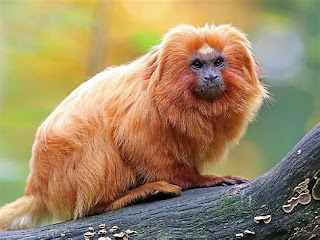
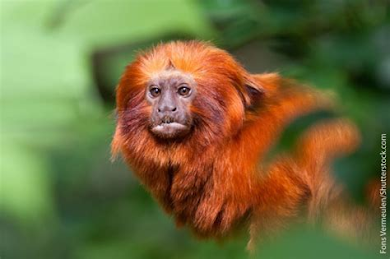
  Clever, sharp, and curious, monkeys belong to one of the most intelligent orders in biological classification. Monkeys Characteristics : Small to medium-sized primates characterized by long tails, hairless faces, long arms and legs, and fur that ranges from white to gold to red to black.  Habitat : Monkeys can be found everywhere around the world; several species live in forests while others live in grasslands and even mountains.  Diet : Fruits, nuts, eggs, seeds, small insects, nectar, and even small frogs and birds depending on the species Conservation : Almost half of the 200 species of monkeys are threatened and around 80 species are endangered Smart and inquisitive, with a quick mind and agility in both the body and brain, monkeys are some of the most respected creatures in society.  Their natural charm and charisma appeal them to others in an effortless way, and they're never short of talent to show off.  I'm a monkey. Thank goodness I was born right on ...
Top 5 Flower and Plants in the Amazon Rainforest

Image
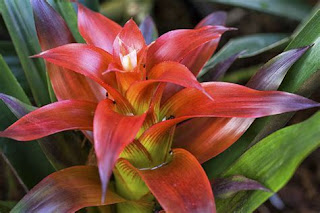
  I feel like that in most wildlife blogs, animals get all the attention while plants and flowers aren't even considered. Yet, the flora in an ecosystem is vital to the whole plant.  Planet. I meant planet.  An ecosystem, and the whole earth really, is really like a complex living clockwork  mechanism where each part is needed for the whole thing to work. Ok, that wasn't as good as the kaleidoscope simile in my other post , but the point is that the fauna of the world isn't the only livings things that need attention and conservation. Plants and flowers are important too; they practically form the structural basis of the world.  In the Amazon Rainforest, there are apparently over 80,000 plant species doing their part to keep the cycle of life going. (The clockwork simile is making more sense now, right?) I say 'apparently' not because of any doubt towards the plants handling their jobs, but because I can hardly believe that there are 80,000 species of anyth...

Top 5 (of the most lethal) Animals in the Amazon Rainforest

Image
  With over tens of thousands of species calling it home, t he Amazon Rainforest is one of the most biodiverse ecosystems in the world. Fauna alone, there are enough animals in the Amazon for me to never be able to learn and write about them all. I know, it's not my best excuse, but it's true. I could never research all 427 mammals, 1300 birds, 378 reptiles, 400 amphibians, and thousands and thousands of fish. And that's why I'm narrowing my focus down to the 20 or so that I believe are the most interesting, important, and influential creatures to the Amazon Rainforest. Over 4000 creatures roam, crawl, fly, swim, and inhabit every corner and surface of the Amazon. Imagine stepping into the chaos; you'd wouldn't be able to take a few steps without seeing something, someone , new, and I think that's crazy. Crazy and beautiful. The Amazon is like a giant kaleidoscope, chaotic and blurry in its infinite shifting parts, glorious if you can focus your gaze. I...

What are the Layers of a Rainforest?

Image
  Pop quiz! Which rainforest layers is shown above? Read on to find out if your guess is correct Ok. So I forgot to post this last year, and now it's finally here. But please ignore that. This post was here the whole time. I'm pretty proud of myself right now for two reasons. One reason is that I still remember enough about the lecture on the layers of rainforests from my APES class to make this post. The other is that I made a totally amazing blurb to introduce this post. It's interactive, it's pithy, and it practically forces you to read the rest of this article. Speaking of pithiness, I'll actually start explaining how the layers of a rainforest work.  It's like a cake. A four-layered cake. Rainforests are split into the Forest Floor, the Understory, the Canopy, and the Emergent Layer (occasionally, the Emergent Layer gets grouped with the Canopy).  The Forest Floor is exactly like the bottom layer of a cake. It's usually soggy, yet hard at the same time,...

First Stop: Why is the Amazon Rainforest Important?

Image
  A post about the importance of the Amazon Rainforest and the dangers it faces due to human impact. Fun fact: when I was looking up 'Amazon fires' to find a nice picture to go alongside this post, a bunch of ads from Amazon.com popped up, trying to sell me tablets.  Amazon .  Did you think of the company or ecosystem first? As tempting as it is to write about my opinions on the Jeff Bezos global domination, I'll instead write about the importance of the Amazon Rainforest and the dangers it faces due to human impact. The Amazon is actually one of the few ecosystems on Earth that most everyone knows about, but I'll explain exactly what it is anyway. Also known as the Amazon Jungle or Amazonia (I prefer the former as "Amazonia" sounds like Amazon inc's twisted version of Disneyland), the Amazon Rainforest is a tropical rainforest located in the Amazon Basin, which covers over 7 million sq km in South America's Bolivia, Brazil, Columbia, Ecuador, French G...

Why is Wildlife Conservation Important?

  An introduction to the blog Let's start from the beginning of our origin story. Around 300,000 years ago, the first  Homo sapiens  lived just like all the other animals that have ever existed. Food, water, shelter, and maybe a heavy stick for caveman purposes; it was all about survival back then. Fast forward the timeline of human evolution, and while it's true that other species have developed as well, the development of  Homo sapiens  has had the most significant effect on the planet. Although it  is  impressive to evolve from hunting and scavenging to creating artificial intelligence and space crafts, the path that led to where we are now has destroyed as much as it has created. 97% of the earth's natural landscape has been disturbed by humans, leaving only 3% untouched land. All of this destruction means the collapse of ecosystems; the loss of life in flora and fauna. Species unable to adapt to the environmental changes made by humans often go ex...